


















Cable hooks and carbon stored in plywood
When choosing a hook for a cable or hose, we usually look at its shape, dimensions and suitability for the workplace. The material deserves attention too. PLYHOOK hooks are made from birch plywood, and wood has an interesting property: it retains carbon that the tree absorbed from the air while growing.1
This provides a meaningful reason to consider using wood. A good choice takes account of both the material’s properties and how the finished hook performs its intended task.
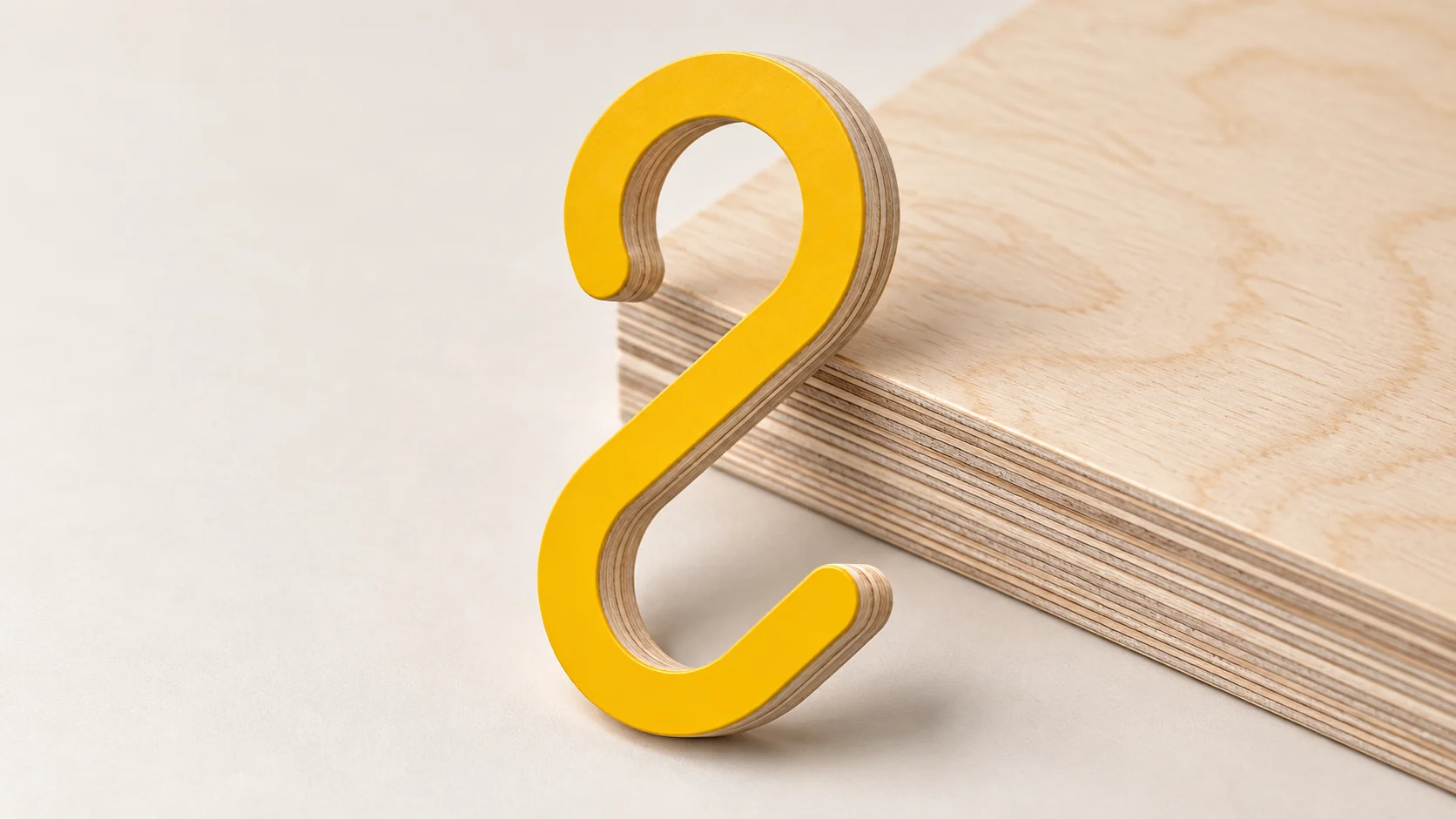
Stored carbon remains part of the wood
A growing tree uses carbon from the air to form wood. When that wood becomes a product, some of the carbon moves into the product with the material. The wooden product itself does not absorb new carbon from the air.1
How long the carbon remains stored depends on how long the wood material lasts. Burning or decomposition can release the carbon back into the environment.2 This makes product use relevant too: choose a suitable model, follow its instructions and keep a serviceable product in use.
See what carbon content means in a calculation
As a general estimate, about half of dry wood mass is carbon. For example, 100 grams of dry wood contains approximately 50 grams of carbon. That amount of carbon corresponds to approximately 183 grams of CO₂ by mass.12
The example helps explain the material’s composition. Its input is dry wood mass, excluding water, adhesive and finish. The 100 grams in the example is not the weight of any PLYHOOK model.
This is a mass calculation of carbon in wood, not a hook’s carbon footprint or an estimate of emissions saved.
How much carbon does the wood component contain?
Wood contains carbon taken up during growth. This simple example explains the mass calculation: the input is dry wood mass alone, not the total weight of a plywood product.
Approximate mass calculation
Enter dry wood mass or try the 100 g example.
This calculates the mass of carbon in wood. It is not the carbon footprint of a hook or a calculation of emissions saved.
The example assumes a carbon fraction of 0.50, or 50% of oven-dry wood mass. This is a generic calculation assumption for wood, not a measurement of a particular plywood or finished product.
Carbon mass = dry wood mass × 0.50. Corresponding CO₂ mass = carbon mass × 44 ÷ 12.
This calculation does not describe a stock of CO₂ gas inside the wood: it shows the CO₂ mass that would contain the same amount of carbon. The subsequent fate of the carbon depends on service life and treatment after use.
Compare hooks for the same task
A useful comparison of plywood, metal and plastic hooks starts with the question: what must the hook do? The same external dimensions or weight do not necessarily mean the same suitability. Equal strength and durability also require data and testing for the specific products.
Once two solutions are demonstrably suitable for the same task, their material use, manufacture, service life and end-of-life treatment can be compared. Life cycle assessment helps consider these stages together.3
| What to compare | What to establish before deciding |
|---|---|
| The task | Which cables or hoses need support, and where will the hook be installed? |
| Load and environment | Which conditions has the specific model been confirmed suitable for? |
| Time in use | How long will it perform the task, and will maintenance or replacements be needed? |
| Material and manufacture | Where does the raw material come from, and what are the impacts of processing, adhesive and finish? |
| Delivery and end of use | How does the product arrive, and what happens to it after use? |
This lets a buyer compare actual solutions. A general table declaring one material always best would leave an important part of the decision unanswered.
Wood sourcing and processing are part of the picture
Wood is a biologically renewable raw material; renewal depends on new forest growth. Forestry practices, sourcing and processing therefore matter when assessing environmental impact. The product’s life cycle also includes energy, packaging, transport and what happens after use.23
For plywood, ask about the wood, adhesive and finish. Wood content alone does not describe all the properties of the finished hook or determine how local waste services will accept it.
When is a plywood hook a sensible choice?
A plywood hook is worth considering when its dimensions, shape and confirmed conditions of use match your task and you want a wood-based product. Carbon stored in the material is one clearly describable property. Assessing the overall environmental impact requires a view of the whole product life cycle.
Start with the shape and dimensions you need: explore PLYHOOK S-hooks and cable hangers, then describe in your enquiry which cables or hoses you want to support and in what environment.
Sources
- IPCC, 2019 Refinement, Volume 4, Chapter 12: Harvested Wood Products, pp. 12.7, 12.16 and Table 12.1. The example’s 0.50 is a general assumption for dry wood mass, not a factor for a finished hook.
- Bergman et al., USDA Forest Products Laboratory, The Carbon Impacts of Wood Products, 2014.
- European Commission, Life Cycle Assessment & the Environmental Footprint methods.